IEC 60601-1 Safety Requirement
A battery-operated patient monitor arrives at a testing laboratory classified as internally powered equipment. However, it also operates while connected to an external mains adapter. This changes its electrical safety evaluation because both power configurations must be considered.
For medical device manufacturers in India, understanding Class I vs Class II medical equipment and internally powered equipment is essential for IEC 60601-1 electrical safety testing and applicable IS 13450 compliance.
Class I equipment uses basic insulation and protective earthing. Class II equipment relies on double or reinforced insulation. Internally powered equipment operates from an internal electrical source, such as a battery. Equipment that connects to mains power must also meet the applicable Class I or Class II requirements while connected.
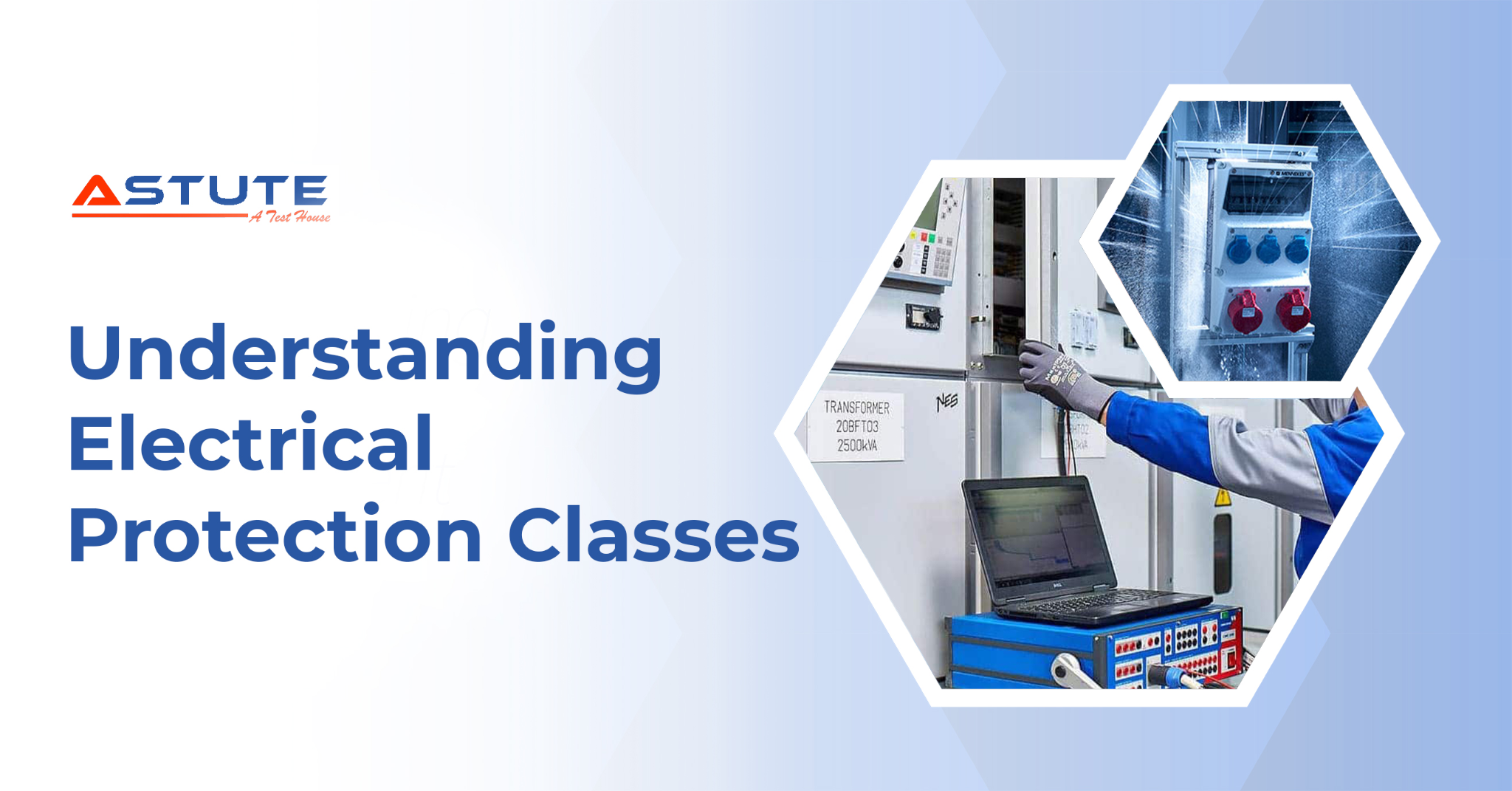
Understanding Electrical Protection Classes Under IEC 60601-1
IEC 60601-1:2005 + AMD1:2012 + AMD2:2020 (Edition 3.2) establishes general requirements for medical electrical equipment safety and essential performance.
In India, IS 13450 (Part 1):2024 is the corresponding national standard, with modifications to the international requirements.
These electrical protection classes are different from CDSCO’s medical device risk Classes A, B, C, and D. They identify how equipment protects against electric shock, not its regulatory risk category.
Manufacturers can review the IEC 60601-1 compliance requirements before selecting an electrical protection architecture.
Class I Medical Equipment: Protection Through Earthing
Class I medical equipment uses basic insulation and protective earthing to reduce electric shock risks.
Specified conductive parts are connected to protective earth, creating a fault-current path if an insulation failure energizes an earthed conductive component.
For example, a mains-powered medical monitor with an earthed metal enclosure may use Class I construction.
Key Testing Requirements
Class I testing includes applicable protective earth continuity, dielectric strength, insulation, leakage current, and single fault evaluations.
Protective earth continuity testing verifies the integrity of the protective earth connection. Earth leakage current testing evaluates current flowing through the protective earth conductor under specified conditions.
A loose protective earth terminal can compromise the intended protection even when equipment functions normally. Manufacturers must therefore verify the complete earthing arrangement.
Read about protective earth continuity testing under IEC 60601-1 for further technical guidance.
Class II Medical Equipment: Protection Through Insulation
Class II medical equipment uses double or reinforced insulation without relying on protective earthing.
Double insulation combines basic and supplementary insulation, while reinforced insulation provides an equivalent degree of protection.
A double insulated medical device requires an insulation system capable of maintaining the necessary protection under specified operating and fault conditions.
Key Testing Requirements
Class II testing evaluates dielectric strength, creepage distances, clearances, insulation construction, and applicable leakage currents. These insulation-related requirements also apply to Class I equipment where required.
For example, an internal switched-mode power supply (SMPS) may fail evaluation when its transformer does not provide the required reinforced insulation or electrical separation.
Such failures can occur even when the equipment appears to operate correctly.
Manufacturers should verify insulation diagrams and power supply specifications before submitting equipment for medical device electrical safety testing.
Internally Powered Medical Equipment: Battery and External Power Safety
Internally powered medical equipment uses an internal electrical power source, commonly a rechargeable battery.
Portable diagnostic instruments and patient monitoring devices are examples of equipment that may operate from internal power.
Safety evaluation considers applicable insulation barriers, touch current, patient leakage current, battery-related hazards, and fault conditions.
Dual Classification Under IEC 60601-1 Clause 6.2
IEC 60601-1 Clause 6.2 establishes an important distinction.
Internally powered equipment with a means of connection to supply mains must meet Class I or Class II requirements while connected and internally powered requirements while disconnected.
For example, a rechargeable patient monitor may be classified as Class II / Internally Powered.
Its mains-connected configuration must satisfy applicable Class II requirements, while its disconnected battery configuration must satisfy internally powered requirements.
Testing only in battery mode may leave the external power configuration insufficiently evaluated.
Manufacturers can explore additional requirements in this guide to battery-operated medical device safety.
Class I vs Class II vs Internally Powered: Comparison
Parameter | Class I | Class II | Internally Powered |
Protection approach | Basic insulation and earthing | Double or reinforced insulation | Internal power with applicable protection |
Protective earth | Required for relevant connections | Not relied upon | Depends on external configuration |
Earth leakage | Applicable | Not applicable without protective earth | Applies in Class I mains mode |
Touch current | Applicable | Applicable | Applicable |
Patient leakage | Based on applied parts | Based on applied parts | Based on applied parts |
Main testing focus | Earthing and insulation | Insulation integrity | Internal and external power safety |
These classifications operate alongside Means of Operator Protection (MOOP) and Means of Patient Protection (MOPP). MOPP generally requires more stringent insulation protection, including higher dielectric test voltages and greater creepage distances.
Applied part classifications, including Type B, BF, and CF, are separate requirements.
Preparing for IEC 60601-1 Testing in India
Before testing, manufacturers should prepare electrical schematics, insulation diagrams, power supply specifications, battery details, applied part information, and risk management documentation.
These records help establish correct test configurations and identify potential design gaps.
The IEC 60601-1 pre-test documentation checklist provides additional preparation guidance.
Electrical Safety Testing Support at Astute Labs
Astute Labs provides medical device testing services covering IEC 60601-1, applicable IS 13450 requirements, and relevant medical equipment standards.
Reviewing protection architecture, insulation documentation, and power configurations before formal testing helps manufacturers identify potential compliance issues earlier.
Establishing the Correct Protection Class
Correct electrical protection classification helps manufacturers plan appropriate testing, verify protective measures, and maintain consistent technical documentation.
Whether equipment is Class I, Class II, or internally powered, evaluating its complete intended operating configuration is essential.
For assistance with IEC 60601-1 electrical safety testing, Contact us.