Safety and Performance Requirements
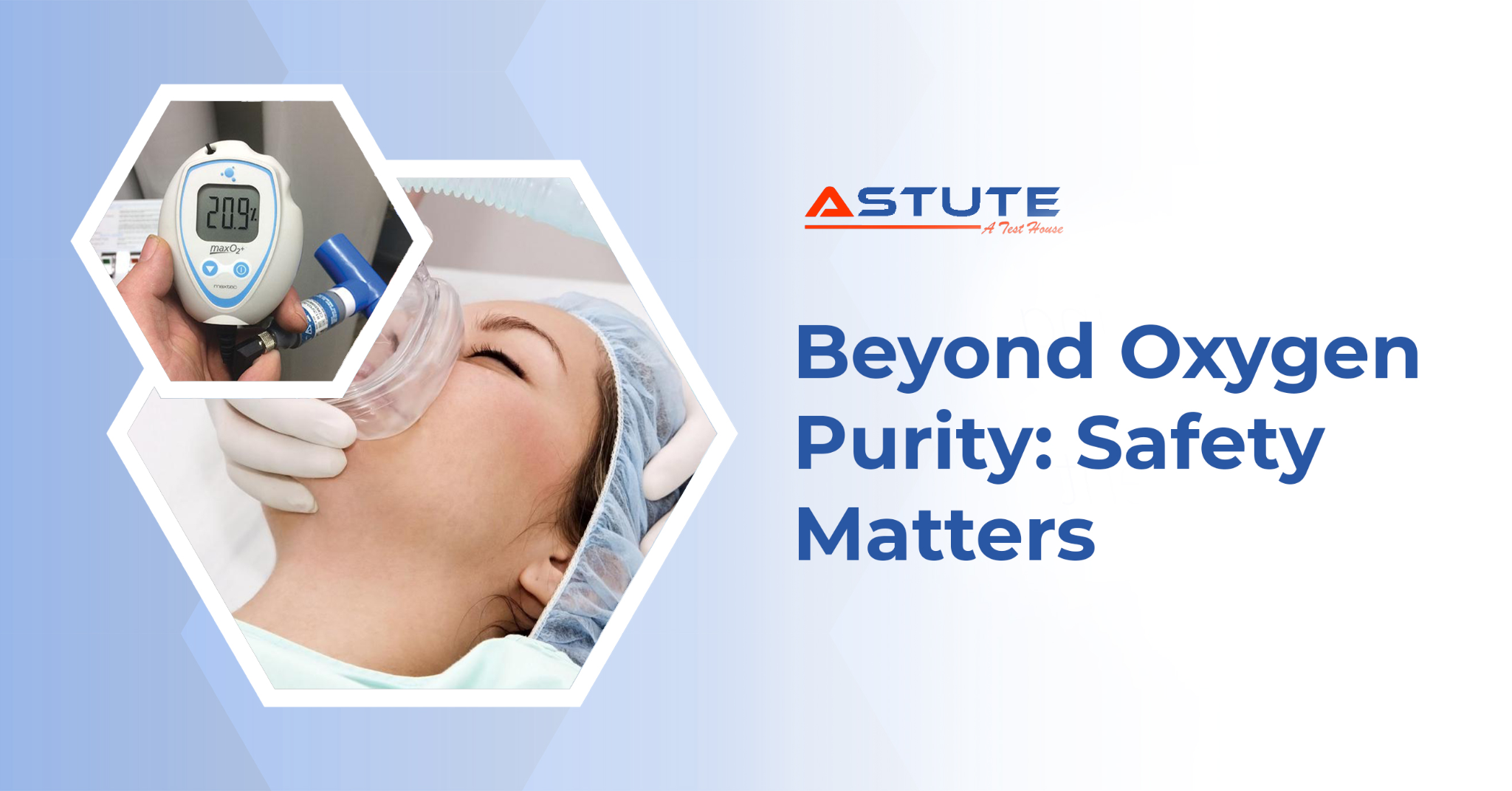
An oxygen concentrator delivers the correct oxygen concentration during normal operation, but its performance deteriorates at maximum flow. More seriously, a fault in the oxygen delivery pathway introduces a potential fire hazard.
Both situations demonstrate why oxygen concentrator safety involves more than measuring oxygen purity.
For manufacturers in India, oxygen concentrator safety testing requires consideration of oxygen delivery performance, fire prevention, electrical protection, alarms and intended operating environments.
ISO 80601-2-69 establishes particular basic safety and essential performance requirements for medical oxygen concentrators. It works alongside IEC 60601-1 and relevant collateral standards to address equipment safety throughout its intended use.
What Is ISO 80601-2-69:2026?
ISO 80601-2-69:2026, Edition 3, replaces the 2020 international edition.
It covers transit-operable and non-transit-operable oxygen concentrators, including equipment integrated with other medical devices or medical electrical systems.
The scope includes certain concentrators with integrated humidification, oxygen-conserving functions, liquid reservoirs or gas cylinder filling functions. It also covers applicable anaesthetic-system configurations.
Accessories such as masks, cannulae, extension tubing, humidifiers, carts, carrying cases and external power supplies must be considered when they affect safety or essential performance.
In India, IS 17625 (Part 2/Sec 69):2021 adopts ISO 80601-2-69:2020. Manufacturers must establish which edition applies to their intended regulatory assessment.
What Changed From ISO 80601-2-69:2020 to 2026?
The 2026 revision introduces several technical updates relevant to manufacturers.
Updated area | Manufacturer implication |
Measurement uncertainty | Review performance measurement methods and reported uncertainty |
Gas-port markings | Check identification of gas intake ports and external gas sources |
Connector requirements | Review relevant gas connections and accessories |
Enclosure processing | Assess applicable cleaning and processing instructions |
Cybersecurity recommendations | Consider connected equipment and associated risks |
The revision also updates references and aligns applicable manufacturer-supplied information with ISO 20417.
These changes make a gap assessment important when updating documentation prepared against the 2020 edition.
Oxygen Concentration and Flow Performance Testing
Oxygen concentrators must deliver oxygen-enriched gas within their specified operating range.
Performance can deteriorate because of compressor wear, molecular sieve degradation, valve timing errors or internal leakage.
For example, a concentrator may achieve its declared oxygen concentration at 2 L/min but fall below its specified performance range at maximum flow.
Testing should therefore cover relevant flow settings, output pressure and environmental conditions.
Altitude is particularly important for equipment intended for regions such as Ladakh or the Himalayan states, where reduced atmospheric pressure affects compressor and oxygen separation performance.
Manufacturers need documented evidence that equipment satisfies its applicable performance requirements under declared conditions.
Fire Safety in Oxygen-Enriched Environments
Oxygen concentrators present a distinctive fire hazard because oxygen-enriched gas can intensify combustion.
IEC 60601-1 Clause 11.2 addresses fire prevention requirements associated with oxygen-rich environments. ISO 80601-2-69 adds oxygen concentrator-specific safety considerations.
Preventing Fire Propagation Through Oxygen Tubing
An ignition source near a patient, including smoking materials, can ignite oxygen delivery tubing.
Fire can then propagate along the tubing toward the concentrator.
Manufacturers should evaluate appropriate fire-propagation protection, including suitable fire-break arrangements where required by the applicable equipment design and standard provisions.
The assessment must consider oxygen delivery accessories, materials, installation instructions and foreseeable misuse.
Fire protection must also be coordinated with electrical design, because internal overheating or electrical faults can introduce additional ignition hazards.
Home Healthcare and Transport Safety Requirements
Many oxygen concentrators are intended for use outside professional healthcare facilities.
IEC 60601-1-11:2015 + AMD1:2020 addresses medical electrical equipment used in home healthcare environments.
Relevant considerations include enclosure protection, mechanical robustness, environmental conditions and cleaning requirements.
Transit-operable concentrators intended for emergency medical services environments may also require evaluation against IEC 60601-1-12, depending on the manufacturer’s intended use.
For example, a portable concentrator intended for ambulance transport can face vibration, handling and environmental conditions different from those experienced by stationary equipment.
Low-Oxygen and Power Failure Alarm Testing
A concentrator can continue running while oxygen concentration falls below acceptable operating conditions.
Manufacturers must evaluate relevant low-oxygen alarm behavior, including detection, activation and user notification.
The 2020 edition addressed low-oxygen alarm conditions. For the 2026 edition, manufacturers must apply its updated requirements and acceptance criteria rather than assuming previous thresholds remain unchanged.
Power failure is another important consideration.
Where an interruption of electrical supply affects oxygen delivery, the applicable alarm and safety-response requirements must be evaluated according to the equipment configuration.
The IEC 60601-1-8 alarm system testing guide explains broader medical alarm system requirements.
Electrical Safety, Battery and EMC Testing
Oxygen concentrators incorporate compressors, motors, switching power supplies and electronic control circuits.
Electrical safety evaluation addresses relevant insulation, leakage currents, temperature rise, protective earthing and specified fault conditions.
For battery-operated equipment, charging arrangements and internal power operation introduce additional considerations. Manufacturers can review the battery-operated medical device safety guide.
Electromagnetic disturbances can also affect oxygen sensors, compressor controls and alarms.
Appropriate EMI/EMC testing helps assess electromagnetic emissions and immunity under applicable medical equipment requirements.
Where relevant, breathing gas pathway materials should also be assessed against applicable ISO 18562 biocompatibility requirements.
Medical Equipment Electrical Safety Testing at Astute Labs
Astute Labs provides medical device testing services covering IEC 60601-1 electrical safety and relevant medical equipment standards.
For oxygen concentrator manufacturers, electrical protection, power supply integration, EMC performance and applicable documentation are important parts of the broader safety evaluation.
Identifying these requirements during product development helps manufacturers address potential design issues before formal regulatory assessment.
Preparing Oxygen Concentrators for Safety Evaluation
ISO 80601-2-69 connects oxygen delivery performance with fire protection, alarms, operating environments and electrical safety.
Manufacturers should establish the applicable standard editions, intended equipment configurations and required testing scope before submission.
For assistance with medical equipment electrical safety and EMC requirements, Contact us.