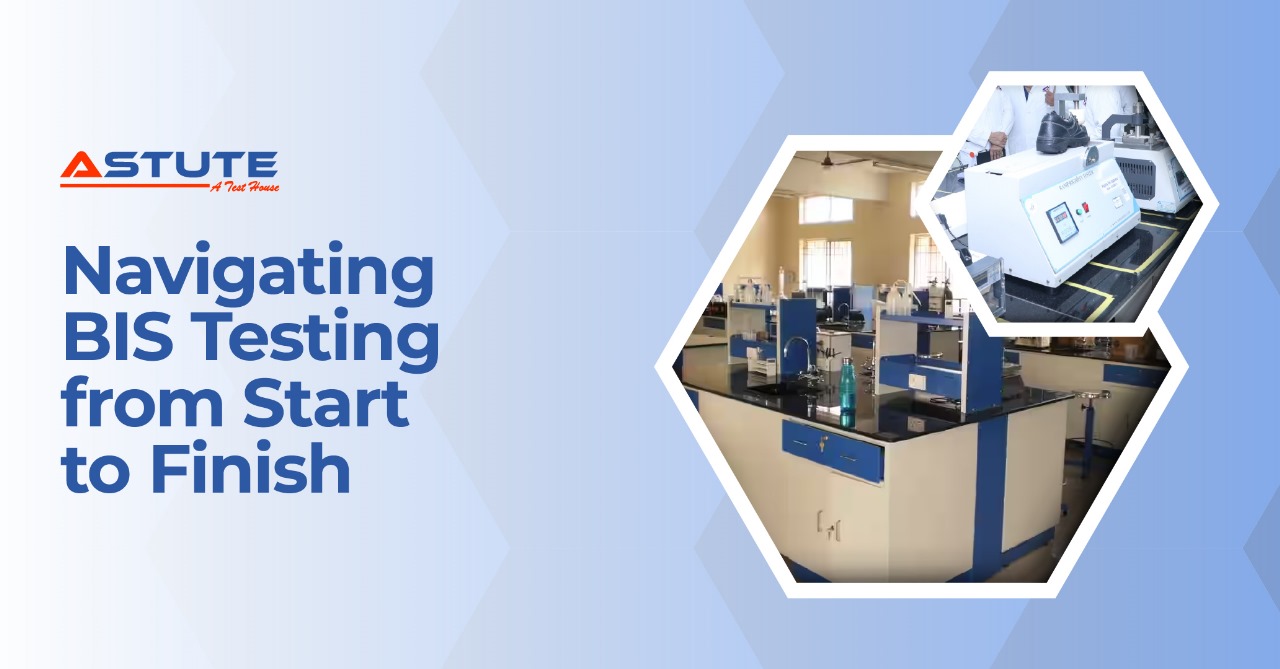
Testing medical devices in a BIS-recognized laboratory is essential for manufacturers and importers seeking market access in India. BIS testing confirms that a device meets the defined safety, quality, and performance requirements set by Indian Standards. This evidence influences approval readiness, public procurement eligibility, and patient safety outcomes.
All BIS certification and testing activities are managed through the Manakonline portal, which serves as the central platform for applications, sample submissions, and certification progress tracking. Understanding its role early helps manufacturers plan documentation flow and testing timelines more effectively.
For device categories that require mandatory BIS compliance, test reports must come from BIS-recognized laboratories with a validated technical scope. This testing also supports evidence preparation for CDSCO submissions. Manufacturers who work with electrical and patient-critical devices can explore applicable testing standards through the overview shared on the medical device testing services.
Understanding BIS recognition and standards landscape
The Bureau of Indian Standards governs national conformity and safety frameworks for medical devices, supporting more than 1,700 healthcare standards, including over 1,200 that directly apply to medical device categories. By December 2025, 214 medical devices are expected to fall under the mandatory BIS certification scope.
BIS addresses product safety and performance, while CDSCO governs regulatory and clinical licensing. Together, they form complementary components of India’s regulatory system, where BIS testing strengthens the evidence required during CDSCO reviews and procurement decisions.
BIS certification schemes for medical devices
The BIS certification pathway depends on whether the manufacturer is domestic or international and whether the product falls within specific compliance categories. The three key schemes include:
ISI Mark certification
Used by Indian manufacturers and includes a combination of factory inspection, documentation review, and third-party testing in a BIS-recognized laboratory.
Foreign Manufacturers Certification Scheme (FMCS)
Required for overseas manufacturers supplying into India, including factory inspection and coordination across geographies.
Compulsory Registration Scheme (CRS)
Used primarily for electronic and IT-based products that need compliance validation without factory inspections, supported by a BIS-recognized laboratory testing.
Each certification scheme requires independent test reports issued through BIS-recognized laboratories.
Selecting a BIS-recognized laboratory
Choosing the right laboratory is essential because BIS will only accept reports from facilities recognized for technical capability. A BIS-recognized laboratory should have:
- Accreditation to ISO IEC 17025:2017
- Valid BIS recognition status
- Scope coverage for electrical safety, EMC, biocompatibility, sterilization, performance, and packaging evaluation
- Capability for worst case configuration testing when required
- Documented quality and reporting systems that align with regulatory expectations
Laboratories with both BIS recognition and NABL accreditation provide strong credibility for regulatory submissions and procurement decisions.
For example, electromagnetic compatibility testing requirements can be reviewed through the EMI EMC testing services capability overview that outlines multi scenario compliance evaluation.
BIS testing process step by step
The BIS recognized laboratory process follows a structured sequence that aligns test planning, documentation, and regulatory submission milestones.
Step 1: Identify standards and device classification
Determine applicable standards for electrical safety, EMC, biocompatibility, sterilization, mechanical evaluation, environmental exposure, and software verification.
Step 2: Select a BIS recognized laboratory
Confirm recognition status and technical scope before initiating application.
Step 3: Prepare documentation
Include device description, technical specifications, risk analysis, design and manufacturing documentation, labeling, and intended use.
Step 4: Develop a testing plan
Define sample quantities, testing order, acceptance criteria, and retest approach.
Step 5: Register on the Manakonline portal
Create an account, submit device details, and initiate testing requests within the BIS digital platform.
Step 6: Generate test request and submit samples
Package devices securely with correct identification and documentation. Maintain chain of custody records.
Step 7: Laboratory receipt and pre testing activities
Samples are logged, verified for physical condition, and queued for test execution.
Step 8: Execute testing protocol
Testing is conducted based on the applicable Indian Standards. Data integrity, measurement traceability, and engineering observations are recorded throughout.
Step 9: Review draft reports
Manufacturers verify accuracy before final sign off.
Step 10: Final test report issue
The BIS recognized laboratory releases the official report including accreditation details and authorized signatures.
Step 11: Submit BIS application through Manakonline
Upload test reports and supporting documents and track application status.
BIS and regulatory synergy
BIS aligned test reports strengthen CDSCO approval submissions and provide evidence needed during technical reviews. Integrated testing supports:
- Improved acceptance of device performance claims
- Better readiness for inspections and audits
- Public procurement and tender eligibility
- Post market monitoring and batch verification programs
Devices undergoing CDSCO approval benefit significantly from evidence produced in BIS recognized laboratories, protecting both regulatory outcomes and clinical expectations.
Strategic laboratory selection considerations
Manufacturers can improve efficiency and readiness by choosing laboratories that offer:
- Consolidated testing capabilities under one facility
- Structured reporting aligned with regulatory formats
- Support for pre compliance evaluation
- Technical advisory for testing decisions and sequencing
This improves the quality of testing outcomes and reduces uncertainty during approval review.
How Astute Labs supports BIS-aligned testing
Astute Labs provides testing capability for electrical medical equipment, ventilators, electrosurgical units, incubators, infusion pumps, and other active devices requiring BIS-aligned evaluation. The facility supports electrical safety validation, EMI and EMC testing, biocompatibility support, environmental ageing studies, packaging strength assessment, and calibration services aligned with regulatory expectations.
To understand how your device can be prepared for BIS testing and certification, review the laboratory capabilities on the medical device testing section or connect through the contact section to discuss testing requirements with the team.