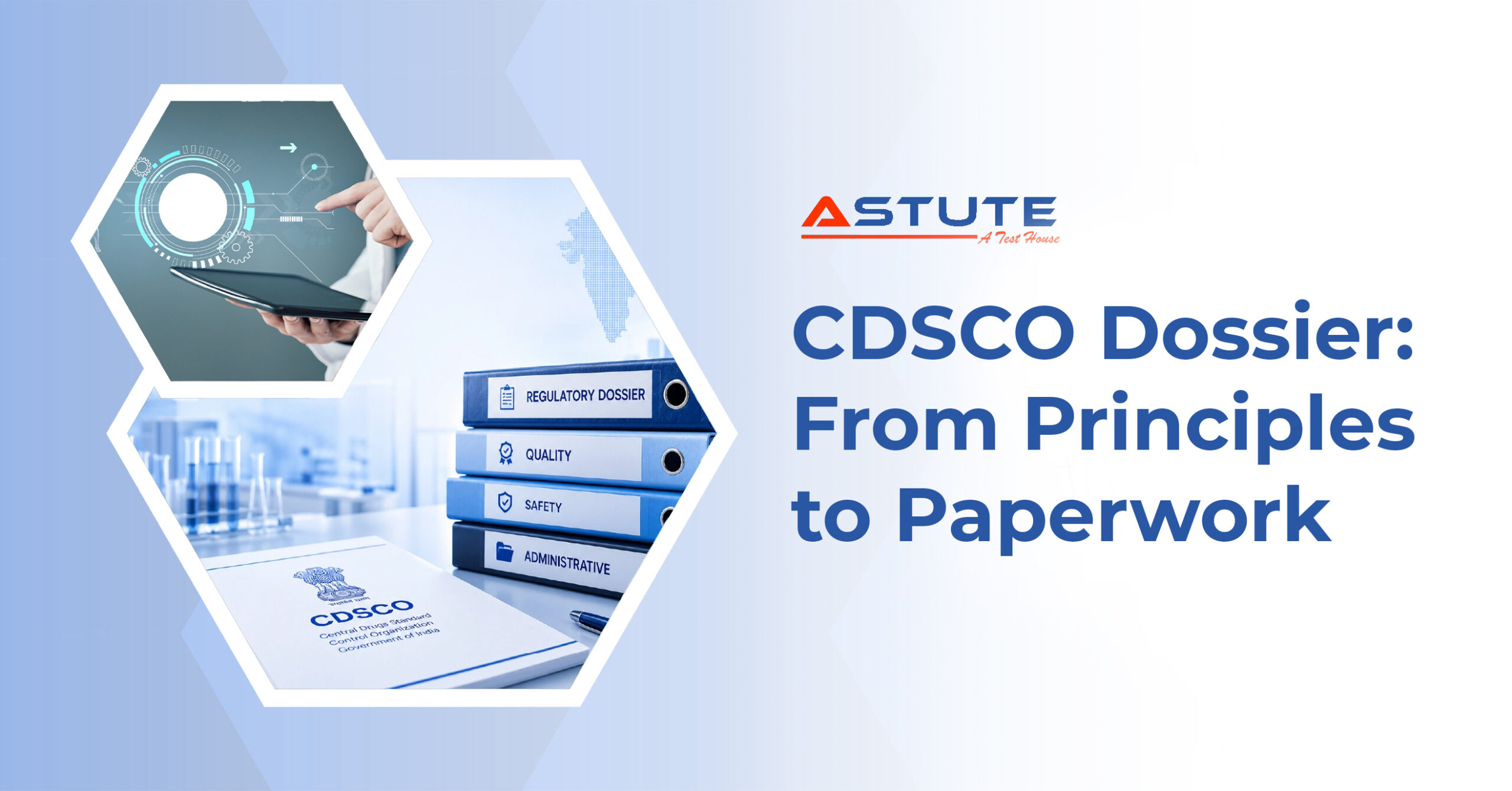
Most CDSCO delays are not caused by a weak device. They are caused by documentation that was assembled at the last minute rather than prepared alongside the product. A manufacturer can have a well-engineered device and still face repeated query rounds because the submission cannot show, clearly and traceably, that each safety and performance requirement was met. At the centre of that problem sit two connected things: the Essential Principles checklist and the test dossier that is supposed to substantiate it.
What the Essential Principles Require
Under the Medical Devices Rules, 2017, every manufacturer must demonstrate that a device conforms to the Essential Principles of Safety and Performance laid down by CDSCO. These principles cover general requirements that apply to all devices, such as risk management and acceptable benefit-risk balance, along with design and construction requirements covering chemical and physical properties, protection against electrical and mechanical hazards, and accurate labelling. Where a principle does not apply to a particular device, the manufacturer is expected to state that clearly and justify why, rather than leave it blank. This distinction between what applies and what has been consciously excluded is something reviewers look at closely, and knowing the medical device testing requirements by class helps set the right scope early.
The Checklist as a Traceability Map
The Essential Principles checklist is often misread as a form to be filled. It is better understood as a traceability map. Every principle claimed as met should cross-reference the specific evidence that proves it, whether that is a test report, a validation study, or clinical data. CDSCO reviewers follow those links directly, and broken traceability is one of the most common triggers for substantive queries. A principle marked as met but pointing to a superseded standard, or to a report that does not actually cover the claimed parameter, will surface quickly. The stronger the link between each claim and a current, accredited test report, the fewer questions the file generates. This is where familiarity with the CDSCO approval process and the CDSCO medical device testing process pays off.
Where the Test Dossier Sits in the Device Master File
The test dossier does not stand alone. It sits inside the Device Master File, structured in line with Appendix II of the Fourth Schedule of the Rules. Alongside the executive summary, device description, grouping justification, and labelling, the DMF carries the Essential Principles checklist, the risk analysis and control summary conducted under ISO 14971, and the verification and validation data for the device. The test reports are the backbone of that verification section. Higher-risk devices demand deeper evidence at every level, so a Class C or Class D submission requires far more detailed test and clinical documentation than a Class A device, a difference explored in Class B vs Class C device testing.
How Test Reports Substantiate Conformity
For most active medical electrical equipment, the evidence behind the Essential Principles comes from recognised standards. Electrical safety is demonstrated through IEC 60601-1, electromagnetic compatibility through IEC 60601-1-2, and specific performance parameters through the relevant particular standards for that device type. The value of these reports in a submission depends on two things: that they are issued to the current edition of the standard, and that they are produced under a recognised quality system. A report carrying ISO/IEC 17025 accredited test report quality carries weight with reviewers precisely because its traceability and competence are independently assured. The connected guides on the IEC 60601-1 compliance guide and IEC 60601-1-2 EMC testing explain what each report should contain.
Why Preparation Beats Assembly
The manufacturers who move through licensing fastest treat documentation as something built during development, not reconstructed at submission. Pulling reports together at the end tends to expose gaps: a parameter never tested, a design change that was never re-evaluated, or a report tied to an edition the standard has since replaced. Each gap becomes a query, and each query round adds weeks. Planning test evidence early, and keeping an IEC 60601-1 pre-test documentation checklist aligned to the Essential Principles, is one of the most reliable ways to reduce certification delays.
How Astute Labs Strengthens Your Submission Dossier
Astute Labs works with manufacturers to produce the accredited test evidence that the Essential Principles checklist depends on. As a NABL, BIS, and CDSCO-recognised laboratory, our reports are issued against current standard editions with the traceability that reviewers expect, so each claim in the checklist can point to evidence that holds up under scrutiny. Whether the requirement is safety, EMI EMC Testing, or device-specific performance, the aim is the same: a dossier where testing and documentation reinforce each other rather than leaving gaps for reviewers to find.
A submission is only as strong as the evidence behind its claims. Preparing that evidence early, through a testing partner whose reports map cleanly to the Essential Principles, is what keeps a licensing timeline predictable. To align your device with the right Medical Device Testing and dossier requirements, Contact us.
Related reading: third-party medical device testing for regulatory compliance, BIS and NABL dual accreditation, and design change vs retesting.