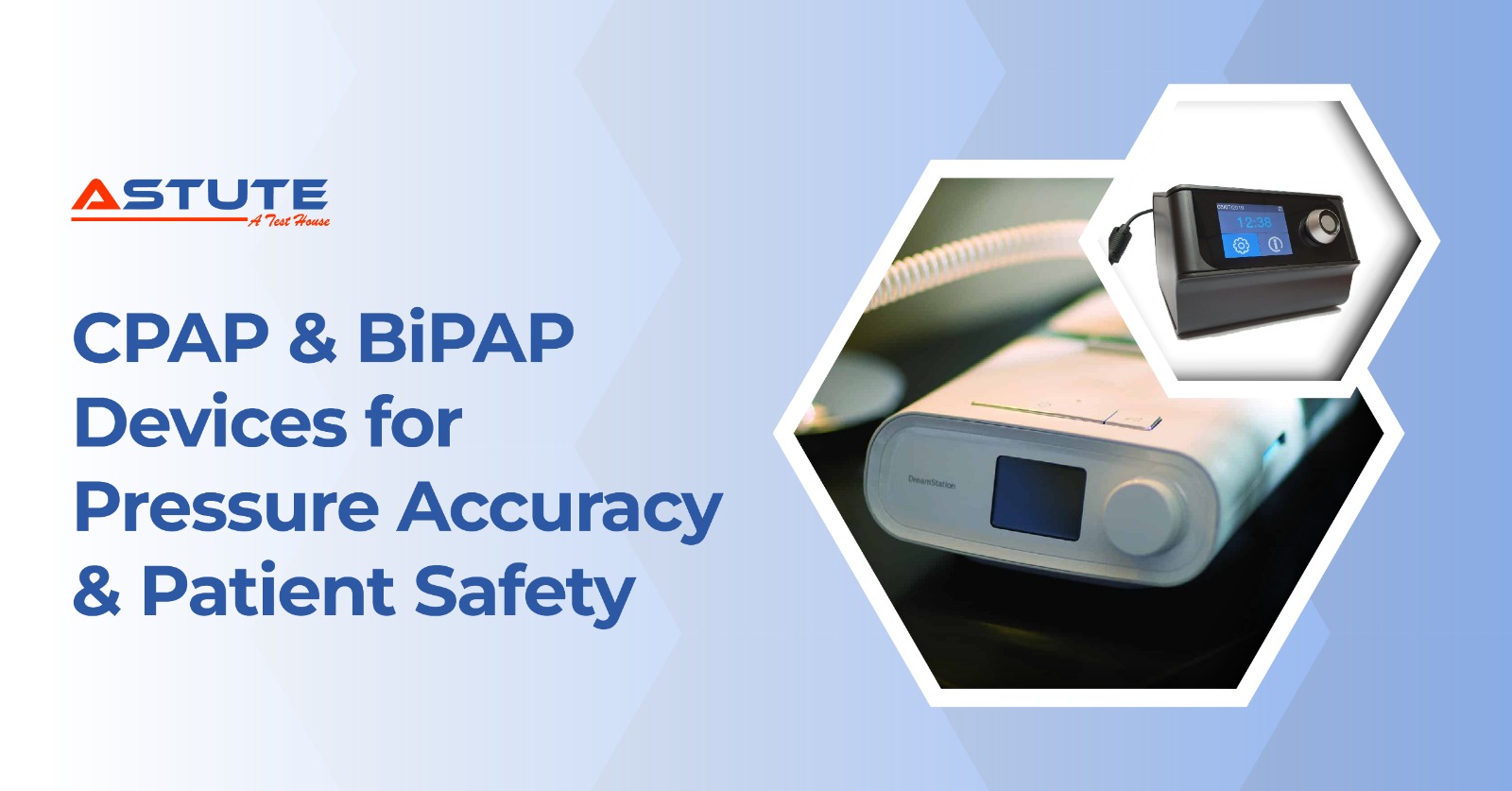
Sleep apnea therapy devices are no longer limited to hospitals or sleep labs. CPAP and BiPAP machines are widely used in home environments by non-clinical users.
This shift increases the importance of reliability. If a device delivers incorrect pressure, fails to respond to breathing patterns, or does not alert the user during faults, therapy can become ineffective or unsafe.
ISO 80601-2-70 defines how these devices must perform. It focuses on ensuring that sleep apnea therapy equipment delivers consistent pressure, responds correctly during breathing cycles, and maintains safety under real use conditions.
What ISO 80601-2-70 Covers
ISO 80601-2-70 applies to sleep apnea breathing therapy equipment intended to treat obstructive sleep apnea through controlled airway pressure. It is used alongside general safety standards and applies to both home and clinical environments.
It does not apply to ventilator-dependent patients. That distinction is critical because testing expectations differ significantly between therapy devices and life-support ventilators.
Scope Comparison
Equipment Type | Purpose | Patient Type | Standard |
CPAP / BiPAP | Sleep apnea therapy | Non-ventilator-dependent patients | ISO 80601-2-70 |
Home ventilator | Assisted breathing | Ventilator-dependent patients | ISO 80601-2-72 |
Critical care ventilator | Full respiratory support | ICU patients | ISO 80601-2-12 |
Masks and accessories | Interface safety | PAP users | ISO 17510 |
Understanding this scope early helps avoid incorrect test planning and regulatory delays.
Why Pressure Accuracy Is Critical
The core function of a CPAP or BiPAP machine is pressure delivery. If pressure is unstable or inaccurate, the therapy loses effectiveness.
For CPAP systems, the focus is maintaining a constant pressure level.
For BiPAP systems, the focus expands to managing transitions between inspiratory and expiratory pressure levels.
Poor pressure control can lead to discomfort, poor sleep quality, and reduced therapy adherence. It is also one of the most common reasons for compliance queries.
To understand how general safety requirements connect with device performance, refer to the IEC 60601-1 compliance guide for medical equipment.
Static and Dynamic Pressure Performance
Pressure validation is not limited to a single test. It must be evaluated under multiple conditions.
Static performance checks whether the device can maintain the set pressure over time.
Dynamic performance evaluates how the device behaves during actual breathing cycles.
Pressure Testing Summary
Test Area | Evaluation Focus | Impact |
Static pressure accuracy | Stability over time | Consistent overnight therapy |
Dynamic pressure accuracy | Response to breathing cycles | Real-world performance |
IPAP and EPAP transitions | BiPAP pressure switching | Patient comfort and synchronization |
Performance with accessories | Effect of tubing and filters | Actual delivered pressure |
Dynamic instability often leads to patient discomfort and therapy discontinuation, even when static performance appears acceptable.
Leak Compensation and Real Use Conditions
Real-world use introduces variables such as mask leaks, tubing resistance, and accessory variations. These factors can change the pressure delivered to the patient.
Devices must compensate for these variations. If they do not, the therapy setting displayed on the device may not match the pressure received by the patient.
Manufacturers should validate performance across different configurations and ensure claims are supported by evidence.
This is similar to how early validation helps prevent failures in areas like pre-compliance EMC testing and medical device EMC failure mitigation under IEC 60601-1-2.
Alarm Functionality and Safety
Alarms are part of essential performance. They help users identify conditions where therapy may fail or become unsafe.
Typical alarm conditions include:
- Power failure
- Disconnection
- Pressure deviation
- Internal faults
In home environments, alarm design must consider usability. An alert that exists but is not noticed or understood still creates risk.
Effective alarm validation focuses on detection, response time, and user awareness.
Patient Interface and Mask Safety
The therapy system includes more than the device itself. Masks, tubing, and connectors directly affect performance and safety.
Improper sealing, leakage, or poor exhaust design can reduce therapy effectiveness. In some cases, it can lead to carbon dioxide rebreathing risks.
These components must be evaluated as part of the complete system, not as isolated accessories.
Biocompatibility of the Breathing Pathway
Airflow path materials are continuously exposed to the patient’s respiratory system. This makes biocompatibility a critical factor.
Testing focuses on:
- Particulate emissions
- Volatile compounds
- Condensate-related substances
Long-term exposure, humidity, and material aging can change the safety profile of internal components.
Manufacturers should consider insights from an accredited medical device testing lab and the importance of NABL-aligned medical device testing for IEC 60601 and ISO compliance when planning evaluations.
Humidification and Accessories
Humidifiers and heated tubing improve patient comfort but introduce additional variables.
They can affect:
- Pressure stability
- Airflow resistance
- Condensation behavior
If auxiliary components alter device performance, those effects must be evaluated and documented.
What Regulators Expect
Regulators assess more than test results. They look for a complete understanding of device performance.
Typical expectations include:
- Clear intended use
- Correct standard alignment
- Pressure validation under realistic conditions
- Verified alarm functionality
- Accessory compatibility
- Biocompatibility assessment
- Risk traceability
Understanding the CDSCO approval process for medical devices in India and medical device testing requirements by class helps align documentation with regulatory expectations.
Common Manufacturer Mistakes
Common issues that delay approvals include:
- Treating the device as a generic electrical product
- Ignoring dynamic pressure validation
- Overlooking mask and interface effects
- Weak alarm testing
- Incomplete material safety evaluation
- Adding accessories without revalidation
These gaps often lead to avoidable rework and regulatory queries.
How Astute Labs Can Support
Testing CPAP and BiPAP devices requires a structured approach that reflects real therapy conditions.
Astute Labs supports manufacturers with medical device testing services and EMI EMC testing services.
These services help ensure alignment with safety standards, performance requirements, and regulatory expectations. Contact us